
History
History
A History of Berks County Community Foundation
on its 15th Anniversary: 1994-2009
Researched and Written by Erin Rowley, 2009 Communications Intern from Penn State
Berks County Community Foundation administers more than 400 funds and has assets totaling more than $47 million. But just 15 years ago, a group of Berks County leaders were still trying to figure out what exactly a community foundation was. What would it do? How would it work? What role would it play in the community?
What is a Community Foundation?
The Council on Foundations defines community foundations as tax-exempt public charities serving thousands of people who share a common interest—improving the quality of life in their area.
Foundations invest and administer charitable funds established by people who want to help their region meet the unique challenges it faces. Volunteer boards made up of individuals who are interested in identifying those challenges oversee the foundations.
But community foundations do much more than administer donor-advised funds. They also identify emerging issues and use their resources to assert an important leadership role in their communities.
In the early 1990s, Berks Countians had no such organization. But that was about to change.
The Beginning
Hildegard “Boots” Ryals, a member of the board of the Wyomissing Foundation, also served on the board of a community foundation in North Carolina. She asked the Wyomissing Foundation’s board of directors why Berks County didn’t have a community foundation. The Wyomissing Foundation’s board was intrigued, and began to look into it.
Wyomissing Foundation volunteer Alfred Hemmerich was excited by the idea. He took it upon himself to explore how a community foundation worked and whether or not it would be possible to start one in Berks County.
“Alfred was a big man, as well as an energetic man,” said J. William Widing, III, who served as the Community Foundation’s attorney when it was created and is currently on its board of directors. “He was motivated by a vision, he was committed to it, and he pursued it with as much energy as I’ve seen anybody pursue anything.”
Hemmerich knew he couldn’t set up a foundation on his own. He employed the help of Eugene Struckhoff, a former president of the Council on Foundations. Hemmerich also relied on a steering committee made up of Widing and other community members who were interested in the formation of a community foundation in Berks County.
Former board member Sidney Kline said Hemmerich’s enthusiasm alone was enough to convince many people to join him.
“If Alfred asked you to get involved with something, you did it. Most people did,” he said.
Berks County Community Foundation’s articles of incorporation were filed June 7, 1994. Ten incorporators — all members of the steering committee — signed the document: Thomas A. Beaver, Nancy V. Giles, Alfred G. Hemmerich, Sidney D. Kline, Karen A. Rightmire, June A. Roedel, William K. Runyeon, David L. Thun, Donald van Roden and J. William Widing, III.
“The original vision was to establish a place where people could develop a foundation with some donor-advised funds, rather than developing their own personal family foundations,” said original board member Karen Rightmire. “So it was a really easy, good way for people who wanted to make gifts in perpetuity, or to make charitable gifts to do it through the foundation.”
Many of the Community Foundation’s first board members were also on the board of the Wyomissing Foundation, including Tom Beaver, who said the Wyomissing Foundation’s willingness to give the young community foundation $1 million in initial operating funds was one of the pivotal moments in the foundation’s history.
The Wyomissing Foundation wasn’t the only group helping the Community Foundation get on its feet. The United Way incubated the Community Foundation, said Rightmire, who recently retired as president of the United Way of Berks County.
“The Foundation’s staff lived in our offices for more than two years until they were ready to afford a space,” she said.
Rightmire said she was interested in being involved in the foundation because it had some of the same goals as the United Way, and she thought the two groups could get more done if they worked together.
Though the fledgling foundation received help from other groups, it needed to attract more money if it was going to start building a significant endowment fund.
A team of people approached corporations, banks and other resources in the area, and explained to them what the Community Foundation was and what its goals were, and solicited seed money from them to build up the foundation’s corpus, former board member Donald van Roden said.
“They weren’t large sums ... but they were meaningful, and it was amazing how many of these organizations were willing to participate,” he said.
Alfred Hemmerich passed away in 1999, but his legacy lives on through the foundation he worked so hard to create.
“I think he would be very proud of what has been accomplished, and justifiably so,” said Kline.
One of the first important decisions the Community Foundation’s board of directors made was hiring a president for the organization.
The Foundation’s President
When he accepted the job of Berks County Community Foundation president in 1994, Kevin Murphy thought he would work at the foundation for a couple of years and then move on.
But 15 years later, his passion for philanthropy has never been stronger. Murphy cites the foundation’s ability to go beyond grantmaking and make a major impact on local issues as the cause of his maintained interest.
“I think what we didn’t anticipate was the extent to which community foundations all across the country, really all across the world, would be thrust into leadership roles in their communities,” he said.
After interviewing him, Alfred Hemmerich immediately liked Murphy for the job.
“A key moment was when we hired Kevin Murphy,” said Sidney Kline. “It had to be somebody like Kevin who had a vision for fundraising, helping guide agencies, seeing the needs of a community, and knowing where the best places for the use of the money would be.”
But Murphy credits his wife as the reason people were so keen to have him come on board.
“The folks who ran the foundation were very fond of my wife, who was the director of development at the Penn State Berks campus,” Murphy said. “They were very eager to keep her in the community and eager to find me a job working in this community so that we would be more rooted here.”
Hemmerich pursued Murphy tirelessly, and though Murphy said the idea sounded “a little wacky” to him in the beginning, he became impressed by the passion and commitment displayed by everyone involved with the foundation.
Making A Difference
With more than 300 charitable funds, and more than $2 million in grants distributed every year, the Community Foundation finds itself involved in all kinds of causes. From funds pertaining to youth and environmental issues to health and religion, the foundation is associated with almost every sector of life in Berks County.
Scholarships from the Community Foundation have enabled high school graduates in Berks County to seek higher education.
Amanda Sell, a 2006 graduate of Oley Valley High School, has received $7,000 from the June A. Roedel healthcare scholarship over a three-year period. This money has enabled her to attend DeSales University where she is majoring in physician assistant studies. Sell said receiving the scholarship has made her life much less stressful.
“It’s helped me be able to focus on school rather than focusing on trying to find money and find a job during school,” she said.
Though every grant made by the foundation is given with the hopes it will have a positive effect on the community, there have been some grants and programs over the years that have been especially important.
“I think the project that we’ve done over the past 15 years that’s attracted the most national attention has been the work that we did in helping the community start to really effectively preserve farmland,” Murphy said.
In 1998, Berks County residents were worried about protecting the farmland that is integral to the way they think about Berks County.
“If you ask people what they love about Berks County, they’ll say, ‘You can be in the city and then 10 minutes later you can be driving around in the rolling farmlands and see the great vistas, and visit the farm stands,’” Murphy said. “So there were a lot of groups trying to figure out how to preserve that land.”
But the groups had different goals and priorities. One of the biggest hurdles was getting them together to come up with cohesive objectives for farmland preservation, Murphy said. Using a grant of about $4,000, the foundation brought in a consultant who worked with the groups until they had developed one goal, which was to preserve 200,000 acres of farmland.
At that time, the county was spending about $1 million a year to buy conservation easements - guarantees from farmers that their land would never be developed.
“$1 million a year was sort of like trying to bail out the ocean with a Dixie cup,” said Murphy. “It was woefully insignificant and there was not much chance that we were going to succeed in this before the developers had developed everything in sight.”
Murphy encouraged county commissioners to use the $1 million to borrow money so they could start buying more conservation easements before anymore land was developed. By the end of the year, the commissioners floated a $35 million bond issue that with matching grants from the state led to about $50 million being spent on farmland conservation in Berks County over a five year period. At the end of that period, the Community Foundation reconvened the interested parties. They re-evaluated their goals, and another $35 million bond was floated with matching state grants.
“A $4,000 grant that ultimately triggered about $100 million in state federal investment took us from a community that was in danger of really losing its farmland to one that will always have it,” Murphy said. “I think that’s an example of where a grant has had a huge impact.”
Farmland isn’t the only aspect of Berks County’s environment that the foundation is concerned about. Being on the forefront of the environmental preservation efforts being made by the county and the state is very important to the foundation. Through the Metropolitan Edison Company Sustainable Energy (Met Ed) Fund, the Community Foundation has been on the forefront of the implementation of wind-generated energy in Pennsylvania, said Richard Mappin, the foundation’s vice president for grantmaking.
“In one way or another, we’ve been involved in every major wind project that is in the state,” he said.
The Community Foundation has also made the health of Berks County residents a top priority. Using money from Community General Hospital, which transferred its foundation to the Community Foundation after it closed in 1997, the Community Foundation commissioned a study of the health of people living in Berks County. Because of that study, the foundation has been able to pinpoint health concerns and react to them, said Mappin. Programs spawned from that study include funding a free clinic, promotion of early prenatal care for pregnant women and a program designed to combat obesity by encouraging children to exercise and learn about proper nutrition.
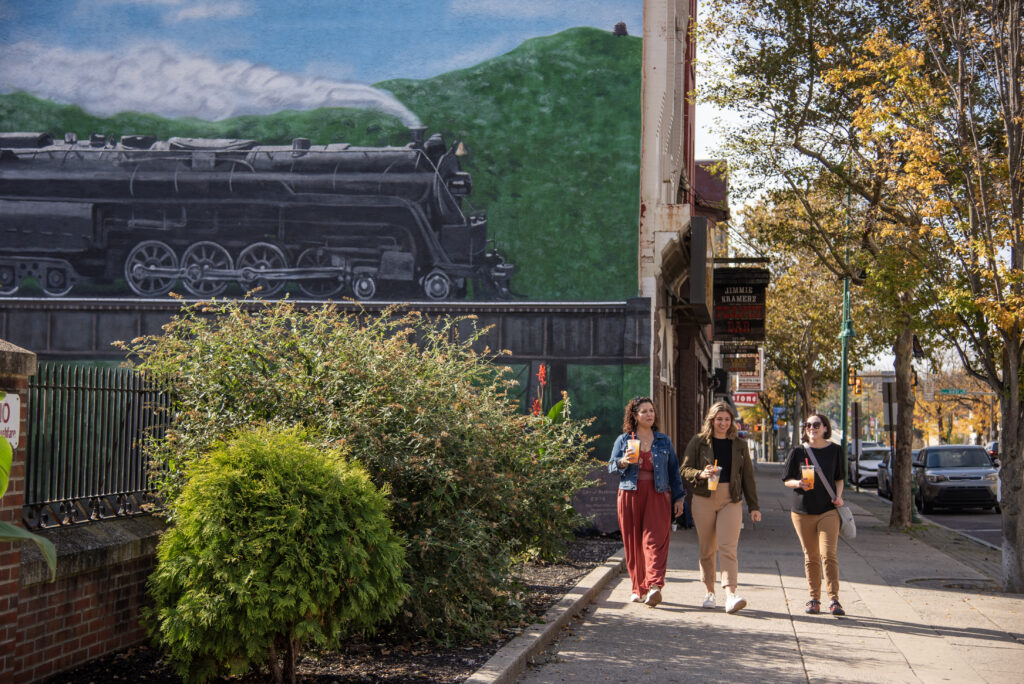
The revitalization of the City of Reading has been important to the Community Foundation since its inception, too. “It’s important for people to realize that an attractive downtown area is not an amenity,” Murphy said. “It’s a necessity if you want to attract young people to the community and keep up with nationwide trends.”
“The pendulum in this country has begun to swing away from suburban sprawl because young people don’t really like strip shopping centers,” Murphy said. “They’re not quite as enamored with suburban tract housing as their parents were, and they’re much more attracted to cool urban spaces.”
In 2004, a new board of commissioners and a new mayor were elected. They identified that Reading didn’t have a coherent plan for economic development and job creation. They asked the Community Foundation to start the Initiative for a Competitive Greater Reading (ICGR), which sought to discover how Reading’s economy would need to change to keep up with changing times.
ICGR was unique because it used data to pinpoint what jobs areas were likely to continue growing and which areas of the county should be focused on, Murphy said.
Penn Avenue, also called the Corridor, was one of the areas ICGR focused on. The corridor leads from Wyomissing to downtown Reading, and when the ICGR group identified it as a portion of the city that needed to be focused on, it affirmed the foundation’s belief that a “vibrant urban core” was a prerequisite to attracting jobs that will power the economy in the future, Murphy said.
Though it’s too early to judge the results of ICGR, Murphy said there has been wide community acceptance of the program’s goals and ideas, and the fact that the community has started to focus on how to improve its economic development is a victory in and of itself.
The Community Foundation is not immune to controversy. In 2007, Berks County District Attorney Mark C. Baldwin gave $1 million seized from drug dealers to the Community Foundation to start a fund called the Berks County District Attorneys Anti-Drug Fund, which supports enforcement of the state’s drug laws.
“In the beginning, it was a controversial fund because there were just an awful lot of people out there who would have liked to have had the money instead of it coming to the Community Foundation,” said Mappin, adding, “That was a fund that came here that really showed how the Community Foundation can take a fund that was not an easy fund to begin with, and put together a program that would have an impact on the community.”
In March 2009, the foundation received its largest gift ever from Myrtle B. Quier, former chair of the board of Reading Eagle Company. In her will, Quier bequeathed more than $10 million to the foundation to create the Hawley and Myrtle Quier Fund. She also donated a significant stake in Reading Eagle Company.
“I thought the contribution from Mrs. Quier was a wonderful example of how the Community Foundation is appreciated, that a person is willing to help perpetuate and do good things in the community through the foundation,” said van Roden.
Another important program the Community Foundation sponsors has made it easier for Berks County’s young people to get involved with philanthropy.
Youth Advisory Committee
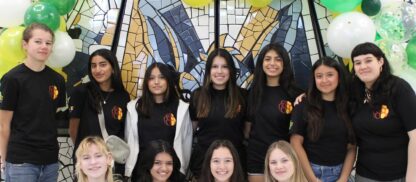
Young Berks Countians looking to get involved in philanthropy have their own oasis within the Community Foundation. The Youth Advisory Committee (YAC) has given teenagers the opportunity to make a difference in their community. Since its inception in 1998, in any given year about 30 Berks County high school students learn the ins and outs of grantmaking, fundraising and the importance of volunteerism. YACsters create requests for proposals, go on site visits and then reconvene to discuss how they want to spend their $15,000 budget. “They have to kind of duke it out amongst themselves about how that money will be allocated,” said Murphy.
Wyomissing High School senior Lauren Wennell, 17, has been a member of YAC for three years. Her brother Ryan, a YAC alumnus, got her interested in the program. She participates in YAC because it’s fun, it allows her to meet interesting new people and she believes it has helped her improve her communications skills. She also likes knowing that she is helping to improve her community. “You’re having fun with other teens, but you’re making a difference. That’s what YAC is,” she said.
Ryan Wennell, 22, said he didn’t have high expectations when he first joined YAC. He expected it to be like a lot of high school clubs which are unorganized and don’t inspire a lot of dedication in their members. But Ryan was pleasantly surprised by how positive the experience was. “It was a lot more organized and well-thought out, and I learned a lot more than I think I ever expected,” he said.
Ryan said he learned important life skills from YAC, including how to set and meet goals and how to communicate his ideas to others. These skills helped him in college, he said, and he expects that they will continue to help him in the future. These benefits are partly why he encourages his sister and others to participate in YAC.
“It’s a fun opportunity to feel like you actually have a job and you’re worth something and you get to come to this nice place in Reading with a nice big board room like this, but that’s the superficial aspect of it,” Ryan said. “Once you get really involved in it, you get a sense of pride that you’ve changed something for the better. That was a neat thing to leave after doing it for three years and knowing I made a difference in my community. I think that’s something everyone should be able to take part in.”
Aside from the skills they learn, YAC has also provided teenagers with the opportunity to study international philanthropy firsthand. Jake Fromm, an 18-year-old graduate of Wyomissing High School, had the opportunity to attend a philanthropy conference in Togliatti, Russia through the YAC program. Fromm met with Russian teenagers who were involved in similar youth philanthropy programs.
“It was just really cool. From across the world, these kids were doing the exact same thing, and that really stands out, he said. “I learned that communities all over the world are doing this.”
Allie Hilovsky, 18, a graduate of Daniel Boone High School, also traveled to Russia with YAC. Hilovsky enjoyed bringing her knowledge of philanthropy to the Russians to help them jumpstart their fledging youth programs.
“That was an incredible experience, and it was awesome to learn so much from the Russians. We were trying to teach them, but at the same time we learned so much from them, despite the communication barriers,” she said.
The teenagers also do their own fundraising with the hopes of permanently endowing the program. By soliciting members of the community for funds, YACsters have raised over a quarter of a million dollars. “The goal of that is just so we can be self-sustaining and eventually use the interest that we earned off of that fund to create more grants and do more good,” said Hilovsky.
Though YAC began as a small, experimental program, it has turned into “one of the signature programs of this community foundation,” Murphy said, adding teenagers bring a lot of energy and a fresh perspective to the Community Foundation.
“The theory here is that we’re teaching these kids about community philanthropy and how community works and teaching them the skills of allocating the resources, but I have to say that pretty consistently, year in, year out, we find ourselves learning a lot more from these kids than I think we’re teaching them,” he said.
Board members, including Donald van Roden, agreed that teaching kids how to be productive citizens is an important goal of the foundation.
Murphy said the YACsters are outspoken about what they want their community to look like and how they think it can be changed for the better, and he is sure their dedication will cause some of them to pursue philanthropy in the future.
“I think some day, the man or woman who’s sitting at my desk will probably be a former Berks County Community Foundation YACster,” he said.
It isn’t just the YACsters who have exchanged ideas internationally.
An International Foundation
In 2001, Kevin Murphy was invited by the German Marshall Fund to be a fellow in their transcontinental community foundation fellowship program, which was designed to send American community foundation CEOs to Europe and European community foundation CEOs to America to learn from each other.
When Murphy first learned he was going to be one of the fellows, he and his wife were expecting a Western European vacation.
“She was picking out where she wanted to be in Paris,” Murphy said, “and I got an e-mail that said, ‘Well, we’d like you to go to Togliatti, Russia.’”
Murphy had never heard of Togliatti, an industrial city about 600 miles south of Moscow, which housed Russia’s first community foundation, founded in 1998. Though the location wouldn’t have been on Murphy’s shortlist of desired destinations, Eastern Europe was the area most in need of help in understanding how to create and run a community foundation.
Murphy spent a few weeks with the foundation’s staff, giving them his perspective on how best to run a community foundation. But he’s learned from the Russians as well.
“To say that I kind of fell in love with their ideas, and I think they became really attached to the way this community foundation had developed would probably be an understatement,” he said, adding there are many ideas this foundation has taken from the Russians that couldn’t have germinated in Pennsylvania, and vice versa.
Murphy has seen his Russian counterparts so much since that first visit that he’s lost track of the number of times he’s visited Togliatti, or they’ve visited Reading.
Berks County Community Foundation now has relationships with 35 Russian community foundations. Through these relationships, “you understand that Americans are sort of born with doctorates in philanthropy,” Murphy said. “We already understand the idea that we should give money back to the community, that we should support our churches, that if there’s a challenge facing our community we need to come together and sit and talk about it.”
Soviet rule, which ended less than 10 years before the Togliatti Community Foundation was created, restricted Russians from convening to do charitable deeds.
“If there was any place where you could just say there are people who aren’t charitable, it would have been Russia,” Murphy said. But working with the Russians affirms the idea that philanthropy isn’t just an American phenomenon. Seeing the Russians tap into that need to help one another after it was repressed for more than 70 years shows just how universal philanthropy is, and inspires Murphy to find ways to inspire everyone to contribute to the community, he said.
“When we see somebody in the community who is not engaged in contributing either financially or intellectually to the community, we cannot take the position that it’s because there’s something wrong or different about them,” he said. “We have to understand that it’s because we haven’t found the way yet that’s important and interesting to them.”
If environmentally-friendly buildings are important and interesting to you, the Community Foundation’s got something you’ll want to see.
Going Green
“When we started saying we were going to build a green building, I actually had a college president say to me that he had built a lot of buildings, but he had never started by picking the exterior color,” Murphy said.
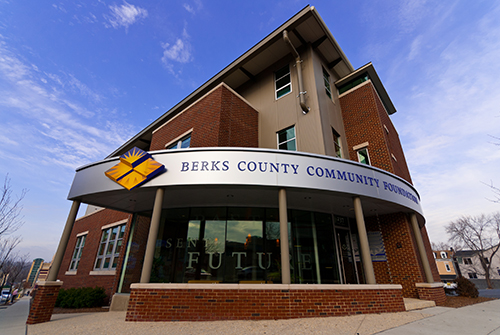
But in this case “green” refers not to the color but to the environmentally-friendly aspects of the Community Foundation’s new building. At the end of the summer, the foundation will leave its longtime home at 501 Washington Street and move to its new space at 237 Court Street.
Since the Community Foundation operates many funds concerning the environment and often advocates for environmentally-friendly measures, it’s only natural that its new home should use green technology, said Richard Mappin.
“It’s a testimony to the Community Foundation in that we live what we believe. We put into action what we talk about,” he said. “This green building is going to show to Berks County, and to all of this region, that energy efficiency is very important.”
The new building is the first of its kind in the city.
“We said ‘Nobody’s ever built a green building around here because nobody’s ever built a green building around here.’ And nobody knows what one looks like and nobody understands the benefits of it,” Murphy said.
The novelty of a green building initially elicited mocking from some — “the hippies are building a green building for themselves,” — and confusion from others who didn’t understand what a green buildings was.
One of the new building’s environmentally-friendly features is its ability to catch rainwater that falls on the roof and use it as part of the building’s water supply, a move that will reduce the building’s water use by about 80 percent. The building is also positioned to make the most out of the light streaming into the windows. On a sunny day about 80 percent of the building’s light will be provided by natural sunlight.
“You could go to some considerable expense to build a combination of walls and windows to keep that sunlight out, and then go buy electricity to create artificial sunlight,” Murphy said. “Or you could be smart about letting that sunlight in, and cut down on your electric bill by in our case, almost half over the course of the year.”
Many people think one must make economic sacrifices to go green, but the foundation’s new building proves that’s it’s possible to combine smart economic choices and smart environmental choices, Mappin said.
“Our building’s not one of these that’s going to have all of this fancy technology that we had to spend thousands or millions of dollars for, that nobody else can afford,” he said. “Everything you find in our building is something that’s very affordable.”
Since the foundation began developing its sustainable building, about seven other green buildings have hit the drawing boards in Reading, Murphy said.
“We know that the building that we’re building has started a movement, if not a revolution towards green buildings locally,” he said.
Murphy attributes that to the foundation’s willingness to allow others to observe its design process, and its publicity blitz about the building.
“Most people don’t talk a lot and create blogs and TV shows about the sewage treatment system in their building,” Murphy said. “We have because we wanted to show people that this was a smart way of doing business.”
The building’s features will not only help the environment, they will also make for healthier, happier, more productive employees, Mappin said.
“If you have worked long enough, you know there’s a huge difference between working in a building that is stuffy and dark as opposed to being in a building that is bright and clean and fresh, he said.
The green building is just one example of the impact the foundation has had on Berks County.
Many of the foundation’s founders and board members have expressed their surprise and pleasure at how successful the Berks County Community Foundation has been in just 15 years.
Board member Sam McCullough said the foundation has become far larger and more influential than he, or anybody else expected. That unexpected growth has enabled the foundation to do more good for the people of Berks County.
“We make a great difference in the community and that of course was the principle reason for starting it in the first place,” he said.
Bill Widing said the foundation’s ability to keep up with the ever-changing needs of the community make working with the foundation interesting and rewarding, and will help the foundation remain relevant in the years to come.
What the Future Holds
Unlike politicians, who have to run for office every few years, Berks County Community Foundation has the unique ability to take the long view - that is, to seek long-term solutions to the county’s problems. Politicians have short shelf lives, but because of its permanent endowment, the foundation can follow through on projects that may take decades to complete.
“As I always say, it will take decades starting from when you start, so waiting a few decades to start only postpones it,” Murphy said.
Murphy said the board’s willingness to sign off on initiatives they personally may never see completed is an asset to the foundation.
Though it’s difficult to predict what kind of issues will be facing Berks County in the future, Murphy said changes in the way its citizens think about the economy will need to be made so that Berks can be as vibrant a community as possible. In the past, Berks was known as an agricultural and manufacturing hub that created cheap, decent-quality goods. Berks County is no longer able to make the cheapest good, but it still has unique qualities that make it attractive, Murphy said.
“Where Berks County has this enormously interesting potential is that we are two hours from downtown New York City, and the New York metro area is sort of bumping up against our front door. We’re an hour from downtown Philadelphia and the edge of the Philadelphia metro area is here,” Murphy said, adding Berks County’s cultural amenities and natural resources provide its residents with a very high quality of life.
Fifteen years after they started the foundation, its founders aren’t yet satisfied with their creation. They want to see it do even more good for the community.
“I would very much like this foundation to have enough of a fund balance that its gifts to the community would rival what we’re able to give through the United Way,” Tom Beaver said, adding that would require at least between $160 and $180 million. “That’s my dream, I think that would just be terrific,” he said. Beaver thinks that goal is possible, but it would require a number of large gifts in a short period of time.
Bill Widing said it’s important to him that the foundation maintain its vision and energy, and that it remains in existence indefinitely, because “that’ll mean that philanthropy, which I think is one of the strongest of American products, is still going strong, and still a vibrant part of our culture,” he said.
“I see great things for the Community Foundation and I think Berks County is like a canvas ready to be painted upon,” said Karen Rightmire. “I believe that the Community Foundation will be one of those organizations that play a key role in that.”
Murphy sees a bright future ahead for the Community Foundation.
“Community foundations are really emerging as the leadership institutions that have the ability to think about the future of their community,” he said. “They have the independence to challenge the status quo, and we’ll be solidifying that.”
“I would want my successor 100 years from now to understand that this institution was created by forward-thinking people to be a vehicle that can continually look for ways to make this place better,” Murphy said. “If this community foundation ever becomes an institution that simply supports the status quo, that doesn’t challenge the community to dream bigger dreams, then it has failed.”
IN THE NEWS
Wednesday, 08 September 2010
Reading (September 8, 2010) – Berks County Community Foundation recently...
Wednesday, 01 September 2010
Reading (September 1, 2010) – Kevin K. Murphy, president of Berks County...
Wednesday, 01 September 2010
Reading (September 1, 2010) – Berks County Community Foundation recently...
UPCOMING EVENTS
| Annual Meeting Wednesday, 3 November 2010 |
| more |
THE PRESIDENT'S JOURNAL
Vision Disturbance ![]() Saturday,04 September 2010 |